
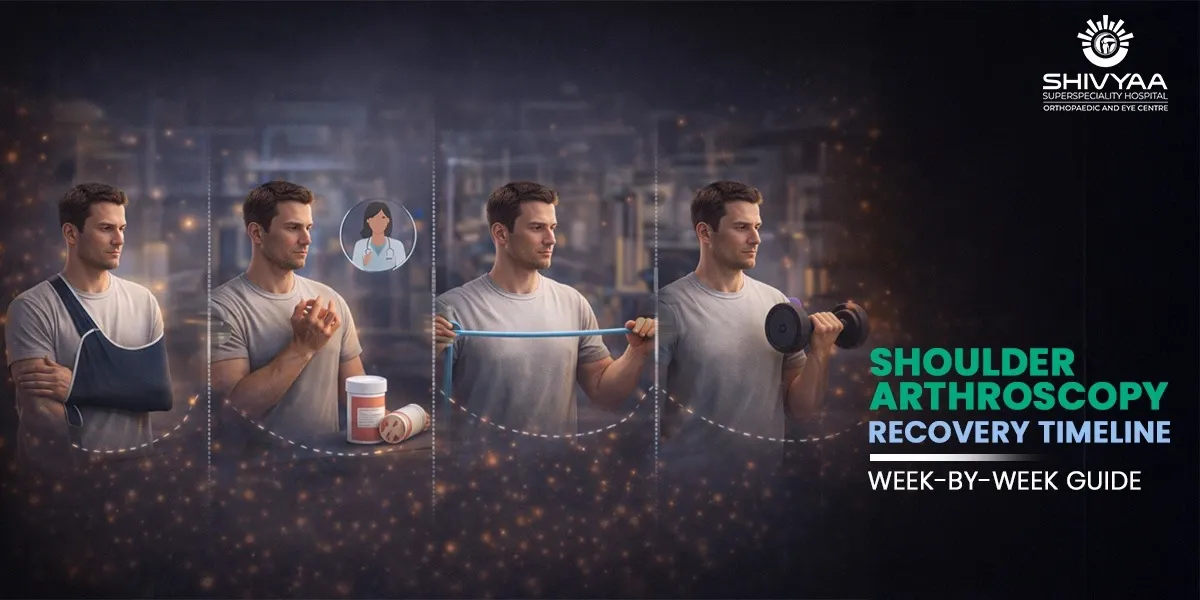
Understanding the shoulder arthroscopy recovery timeline before you go under the knife changes everything. It removes the guesswork and draws a realistic roadmap to recovery. You will not ask yourself whether you are on track, but you will know what to expect every week.
This guide breaks down that entire journey. We move straight from the operating table through your first year of recovery. You’ll learn the critical milestones for each phase and the common mistakes patients make that delay healing. And exactly how to protect your surgical repair while maximizing your range of motion. Let’s get into the specific weeks that define your successful recovery.
Why Choose a Minimally Invasive Approach?
This method is more favorable in the eyes of surgeons since it does not produce a lot of trauma on the muscles and tissues around the site of operation in comparison to open surgery. The patients usually undergo less postoperative pain, and the risk of infection is reduced.
To you, it goes into a quicker beginning of your recovery period of shoulder arthroscopy and, in most cases, a better cosmetic outcome with fewer scars.
We commonly use arthroscopy to address several specific conditions:
- Rotator Cuff Tears: Repair of torn tendons, which connect muscles to the bone.
- Impingement Syndrome: This involves the removal of bone spurs that impinge on your tendons as you move.
- Labral Tears: Repairing the cartilage ring, which holds the joint together, is frequently torn in sports.
- Frozen Shoulder: This involves loosening the tight, thickened tissue to re-establish lost movement.
Loose Bodies: The removal of fragments of bone or cartilage in the joint.
How Your Surgery Type Dictates the Arthroscopy Recovery Time
Arthroscopic Shoulder Surgery
This is a minimally invasive technique that surgeons usually apply when attempting to diagnose or when they are trying to fix certain problems, such as bone spurs, labral tears, or impingement syndrome. They put a small camera inside a small opening to survey the issue and then employ comparatively tiny tools to fix it.
This technique minimizes trauma to the surrounding tissues because it does not cut major muscles. To the patient, this normally translates to a shorter time taken to recover after surgery and also reduced postoperative pain in contrast to open surgery. Physical therapy might start within days, focusing on regaining motion quickly.
Shoulder Replacement Surgery
Replacement is the optimal choice when serious arthritis erases cartilage or when significant damage has occurred to the joints, making all movements impossible. The surgeon excises the damaged cartilage and bone and replaces the joint using smooth prostheses. This is to remove the bone-on-bone grinding and restore normal, comfortable functioning.
The specific type of replacement depends entirely on the patient’s anatomy.
- Total Shoulder Replacement: This is a reconstruction of the natural joint. It is effective when the tendons of the rotator cuff are healthy and strong. The recovery aims at safeguarding the newly developed parts and steadily restoring the strength.
- Reverse Total Shoulder Replacement: This is the surgery where the surgeon reverses the mechanics, replacing the ball and socket position. This design allows the deltoid muscle to work in place of a torn or weak rotator cuff. The recovery plan is quite different because the joint is supported by different muscles at the moment of recovery.
Rotator Cuff Repair
This surgery treats a localized injury: the loss of rotator cuff tendons on the upper arm bone. In surgery, however, the surgeon reattaches the tendon at the original site. This repair is time-consuming and a biological process, taking months to heal the repair back into the bone.
Rotator cuff surgery recovery is longer because the tendon and the bone have to reconnect. It is essential to protect the repair. The patients normally have long slings and are restricted to active movements over several weeks to avoid re-tearing. The extent of the tear and the general health of the patient have a direct effect on the rate of progress of the patient.
Recovery Timeline After Shoulder Arthroscopy
The recovery from the shoulder arthroscopy does not always go according to the same pattern, even though two different patients can recover at different rates. Knowing these stages will make patients patient and focused at every stage. Here is what the weeks look like after surgery.
First Week After Surgery
The postoperative period is aimed at the protection and simple comfort. The patients wake up with the arm in a sling, and the shoulder is stiff and swollen. This is completely normal.
What to expect:
- Middle pain and swelling in the incisions.
- Extensive stiffness of the joint.
- Poor mobility of the arm.
Allowed activities:
- Light hand exercises and wrist and elbow exercises to keep circulation going.
- Brief and repeated walks around the house.
- Ice therapy a few times per day to treat swelling.
Activities to avoid:
- Any kind of lifting, including light objects.
- surgical arm, sudden movements, or reaching.
- Operating machinery or driving with painkiller medication.
2 to 4 Weeks: Early Healing Phase
The level of pain also reduces drastically at this stage. The minor cuts heal, and patients begin to feel like themselves. Physical therapy commences, and it will involve passive movements, where the therapist will move the arm, and the patient will not make an effort.
What improves:
- Surgical wounds close and become less tender
- Night pain starts to decrease
- Comfort during basic seated activities
Allowed activities:
- Eating, writing, and using a computer
- Returning to desk work if pain allows
- Light household tasks like folding clothes
Activities to avoid:
- Carrying pots, bags, or children.
- Access to overhead cupboards or shelves.
- Any gym or sports participation
4 to 8 Weeks: Regaining Mobility
This phase marks a major turning point. Patients begin active movements, using their own muscles to move the arm. The sling may disappear during this period, depending on the surgeon’s guidance.
What improves:
- Shoulder flexibility increases noticeably
- Morning stiffness reduces
- Daily tasks feel easier and more natural
Many patients resume:
- Full-time office work
- Driving under medical discharge.
- The regular domestic tasks, such as sweeping or bed making.
8 to 12 Weeks: Strengthening Phase
At this point, the majority of patients believe that they are making a major improvement and desire to do more. Physical therapy changes the development of the rotator cuff and muscle strength in the area. Stability becomes the focus.
Activities that may resume:
- Moderate household work, like carrying laundry
- Light gym exercises using resistance bands or very light weights
- Non-contact sports such as golf, putting, or light cardio
Still restricted:
- Gym/work heavy lifting.
- Running or jumping: high-impact activity.
- Overhead throwing motions
3 to 6 Months: Return to Normal Activities
The majority of individuals regain their regular life within 3-4 months. But even after more complicated surgeries, such as that of the rotator cuff, it may take up to six months or more to recuperate. The shoulder continues to gain strength quietly during this time.
Activities typically resumed:
- Full office work without restrictions
- Driving comfortably without pain
- Light exercise and regular workouts.
Athletes and physically challenging workers need more time. It is the body that determines the rate and not the calendar.
Returning to Work After Shoulder Arthroscopy
Not all patients respond to work status. It depends on the nature of the job to set the pace of safe returning.
Desk Jobs
Sedentary patients at work usually come back after two to four weeks. Positioning of arms dictates comfort at a desk. Supporting the elbow with a rolled towel or pillow will prevent daytime stiffness.
Physically Demanding Jobs
Jobs that involve lifting, pushing, or overhead duties take three to six months before they can safely resume. Coming back too fast may cause re-injury or retard recovery. The treating surgeon must provide clearance before heavy duties are resumed.
When Can You Resume Exercises After Shoulder Surgery?
This is something that athletes will demand. The schedule will solely rely on the sport and the operation that is done.
- Walking and stationary bicycles: 2-3 weeks.
- Swimming: 8 to 12 weeks (incisions are fully healed)
- Lightweight workout gym: 10-12 weeks.
- Contact sports: 4-6 months
Slow and monitored restoration avoids failures. It is usually a bad idea to begin too harshly and lose gains.
Immediate Recovery
The worry of patients is usually after surgery, during the first few hours. And this is what occurs immediately:
- The majority of the patients walk with support on the same day.
- Nurses check the pain and administer medication when necessary.
- The swelling and pain are mild to moderate with the appropriate ice treatment.
The key takeaway: The recovery after shoulder arthroscopy takes time, yet every week will be marked with positive improvements. Follow the procedure, and the shoulder will follow suit.
Conclusion
With over a decade of excellence in orthopedic care, Shivyaa Hospital combines advanced technology with a deeply patient-focused approach. This is what you need, in regard to your shoulder surgery and recovery: a team that values precision and safety, as well as returning to your life with ease.
The orthopedics services are headed by Dr. Parth Bhavsar, MS Orthopedics, FIAAS, FIHPAS. Having over a decade of specialized experience, he is well known when it comes to his expertise in the very procedures on which this guide is talking. His clinical focus includes:
- Arthroscopy (Keyhole Surgery): In the exact diagnosis of rotator cuff tears, impingement, and labral injuries, as well as in minimally invasive treatment, the procedure is performed with a keyhole.
- Joint Replacement Surgery: Immediate replacement of the shoulder using the most modern methods in order to recover the comfort and functionality.
- Sports Injury Management: Designing individual recovery programs in the best interests of safe and successful athlete reentry into sport.
Dr. Parth’s philosophy centers on compassionate, patient-centric care. He takes you through each stage of your shoulder arthroscopy recovery period, as well as makes you aware of each achievement and supports you.
Ready to discuss your shoulder pain?
Consult with Dr. Parth Bhavsar at Shivyaa Hospital. Schedule an appointment and build your personalized recovery roadmap.