
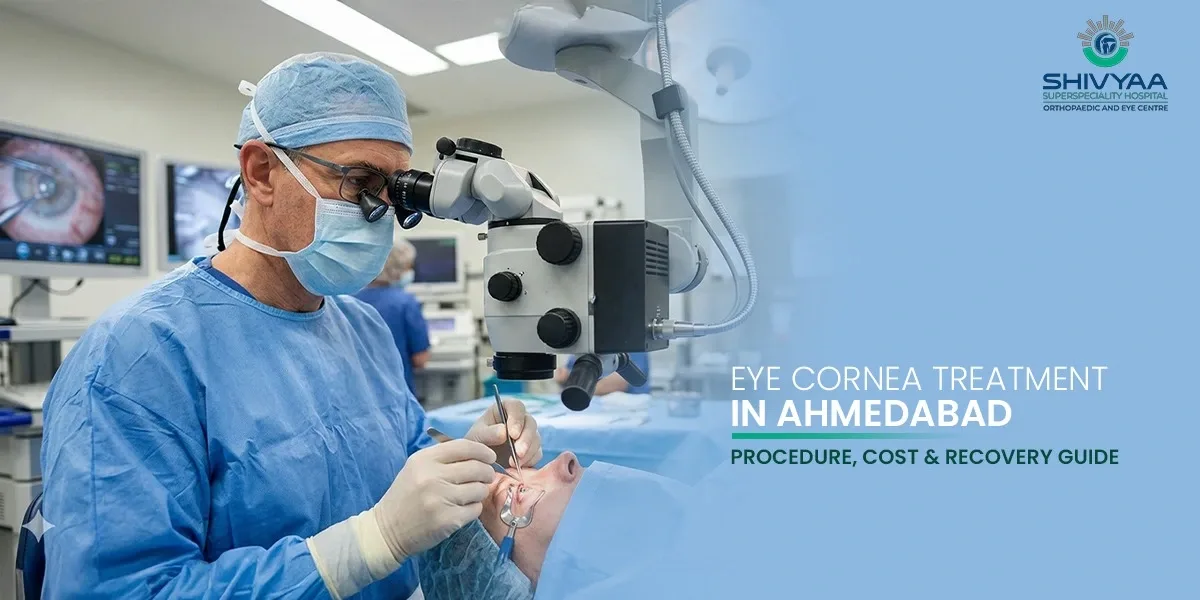
Your cornea does a simple job. It lets light into your eye so you can see. When this transparent layer gets damaged, vision blurs. Colors fade. Reading becomes hard. Driving at night feels unsafe.
Eye cornea treatment has advanced significantly in recent years. What once meant major surgery with a long recovery now offers patients multiple options.
This guide walks you through everything you need to know about eye cornea treatment in Ahmedabad. We cover the procedures, what they cost, and what recovery actually looks like. No fluff. Just clear, practical information to help you make an informed decision about your vision.
What Is Corneal Transplant (Keratoplasty)?
Keratoplasty, or a corneal transplant, replaces a damaged or diseased cornea with a healthy piece of donor eye. The transparent anterior, or front, end of your eye is called the cornea. It focuses light on the retina to enable you to see well.
When your eye becomes cloudy, thinner, or scarred up, you wear the glasses. Colors look faded. Details get blurry. Reading becomes hard. Eye cornea surgery restores that clarity by swapping the problematic tissue with a transparent donor graft.
When Do You Need a Cornea Transplant?
Not all eye issues require surgical intervention. However, some issues damage the cornea to the extent that it cannot be treated with glasses, contacts, or medication. When that happens, eye cornea treatment through transplantation becomes th e clearest path to better vision.
Here are the conditions that often lead to this decision.
Corneal scarring.
Infections or injuries can leave permanent marks on the cornea. If scarring sits in the central visual axis, light cannot pass through clearly. Eye cornea surgery removes that scarred tissue and replaces it with clear donor tissue.
Keratoconus
The cornea thins and bulges outward like a cone. Early stages respond to special contact lenses. Advanced cases need surgical intervention to restore shape and clarity.
Corneal ulcers
Infections may destroy the cornea. In case the damage causes the cornea to become cloudy or weak, then a transplant is required.
Fuchs’ dystrophy
This genetic condition slowly destroys the inner cell layer of the cornea. Fluid builds up. The cornea swells. Vision clouds. Morning hours feel worse. As the disease progresses, eye cornea treatment offers the only real solution.
Chemical burns or trauma
Acid or alkali exposure can scar the cornea permanently. Even extreme physical hits that damage the inner layers can require transplantation to see again.
Previous transplant rejection
It happens that the body rejects the donated cornea. As that occurs, the loss of sight can be restored with a second transplant.
Corneal edema
The cornea swells from fluid buildup. This often happens after cataract surgery or in conditions where the inner cell pump stops working. Persistent swelling that blurs vision may require transplant surgery.
The Cornea Transplant Procedure
Before Surgery
The eye examination happens first with your ophthalmologist. This validates the level of corneal loss and identifies the best transplant method to be applied in the case. Measurements matter here. The surgeon requires the precise size of your cornea to be comparable to the donor tissue.
After the eye bank confirms that there is a good donor match, the team then schedules your procedure. Donor corneas are screened and tested sources. The tissue quality can be relied upon.
During the Procedure
Step 1: Anaesthesia
You receive either local or general anesthesia. Local numbs the eye while you remain awake but relaxed. General puts you completely to sleep. Your surgeon recommends the right choice based on your health and the surgery’s complexity.
Step 2: Incision
To cure the damaged part of your cornea, the surgeon creates a very fine incision. This stage needs precise movements and measurements. Other eye structures are at risk of being too deep. Excessive superficiality results in lost tissue.
Step 3: Donor Tissue Placement
The healthy donor cornea sits carefully into the opening. The surgeon positions it perfectly so that light focuses correctly once healing is complete.
Step 4: Suturing
Fine stitches secure the new tissue in place. These sutures are thinner than a human hair. They hold everything steady while your eye begins its healing process.
Step 5: Immediate Post-Op Care
The team applies antibiotic and anti-inflammatory drops right away. These prevent infection and calm the eye’s natural response to surgery.
After Surgery
The entire procedure takes a few hours from preparation to the recovery room. The team monitors you for any immediate reactions before discharge. Most patients go home the same day.
Eye cornea treatment doesn’t end when you leave the hospital. Recovery matters just as much as the surgery itself. You will need to follow specific aftercare instructions carefully. Your doctor prescribes a schedule of eye drops. You must protect your eye from bumps and pressure. And you will need regular follow-up visits to monitor healing.
Cornea Treatment Cost in Ahmedabad
Finance is a concern whenever carrying out any medical operation. Cornea transplant surgery cost in Ahmedabad remains surprisingly affordable compared to many other cities, without compromising on quality or technology.
Estimated Cost Range for Cornea Procedures
|
Procedure Type |
Estimated Cost Range |
|
Corneal Transplant Surgery |
₹60,000 to ₹1,20,000 |
Why the Price Range Varies
The ₹60,000 to ₹1,20,000 range for eye cornea surgery reflects several important factors. Knowing them will enable you to make realistic budgets.
Type of transplant you need. Partial-thickness transplants, such as DALK or DSEK, can differ in price with respect to full-thickness penetrating keratoplasty. The surgeon is suggesting the method that suits you better.
Donor tissue quality. Eye banks test donor tissue in cell count and purity. High-quality tissue can be more expensive but has better survival rates in the long term.
Hospital facilities. Modern operating theaters and diagnostic equipment in advanced eye institutes are expensive compared to those in smaller nursing homes. You are paying for the technology and comfort.
Surgeon experience. Cornea specialists with years of fellowship training and high success rates typically command higher fees. Most patients consider this investment worthwhile.
Pre-existing conditions. In case of glaucoma, diabetes, or other conditions, you might be required to use supplementary tests or procedures. This adds up to the overall cost.
What the Cost Typically Includes
Always ask for a detailed breakdown. Most comprehensive packages cover:
- Pre-operative consultations and eye examinations
- Donor tissue procurement and screening costs
- Surgeon fees and operation theatre charges
- Standard sutures and medications during hospital stay
- Basic post-operative eye drops
- Initial follow-up visits
Week-by-Week Cornea Transplant Recovery Timeline
Week 1: The First Days After Surgery
After surgery, you will most probably have blurry or hazy vision. Do not worry. This is completely normal. It takes time before your eye acclimatizes to its new tissue.
Suffering is like a sandy, gritty feeling or slight pain. Your physician orders painkillers when necessary. The majority of patients work with over-the-counter solutions.
Medications commence immediately. Eye drops containing antibiotics and steroids prevent infection and inflammation. Take them in their fullness. No skipping doses.
Wear your eye shield. This protects your eyes while sleeping. You cannot control what happens during sleep. The shield prevents accidental rubbing or pressure.
Call your doctor immediately if you experience:
- Severe pain that medication does not help
- Sudden worsening of vision
- Excessive swelling or redness beyond normal levels
Weeks 2–4: Gradual Improvement
Vision slowly clears. You may notice gradual improvement, but fluctuations remain common. Some days look better than others. This is normal during corneal transplant recovery.
Redness and swelling should start decreasing. The eye still looks irritated but less angry than in week one.
Stitches stay in place. Most sutures remain for months. Your doctor decides when to remove them based on healing progress.
Follow activity restrictions strictly:
- Do not stoop, lift heavy, or strain.
- Never rub or press on your eye
- Have water, soap, and shampoo out of the way.
Months 2–3: Stabilising Vision
Vision becomes more consistent. Many patients report clearer sight by this stage. You may still need glasses or contact lenses later. Final refraction happens after complete healing.
Follow-up appointments continue. Your surgeon monitors healing and adjusts medications as needed. Steroid drops may continue at lower doses.
Possible suture adjustment. Your doctor may remove or adjust specific stitches to improve vision and reduce astigmatism.
Months 4 and Beyond: Long-Term Healing
Vision correction happens now. Once your eye stabilizes completely, your specialist determines if you need glasses or specially fitted contact lenses for the best vision.
Continue medications as directed. Many patients use steroid drops long-term to prevent graft rejection. Never stop these without consulting your doctor.
Return to normal activities. Most patients resume work, driving, and daily tasks by this stage. Always follow your surgeon’s clearance before driving.
Conclusion
You now understand what eye cornea treatment involves. The procedures. The costs. The recovery timeline. The next question matters most: where should you go?
Dr. Yatri Bhavsar leads the cornea services at Shivyaa Superspeciality Hospital. With extensive training in corneal procedures and years of surgical experience, she understands what each patient needs.
Why Patients Choose Shivyaa
- Comprehensive eye examinations using modern diagnostic equipment. Accurate measurements mean better surgical outcomes.
- Personalized treatment plans. Your age, overall health, and daily activities all factor into the recommendation.
- Transparent pricing. No hidden costs. No surprises. The team explains the cornea treatment cost in Ahmedabad clearly before you commit.
- Support throughout recovery. From the first consultation to your final follow-up, the team stays with you.
Book a consultation at Shivyaa Superspeciality Hospital. Bring your questions. Bring your reports. Leave with a clear understanding of what corneal transplant recovery looks like for you.
Your journey to a clearer vision starts with one conversation.