
That gritty, scratchy sensation in your eyes drives you crazy by midday. You take the eye drops again, but the pain is temporary. You aren’t alone. Millions of people experience a repetitive pattern of solutions that are only temporary. The real question isn’t whether to treat dry eyes; it’s how.
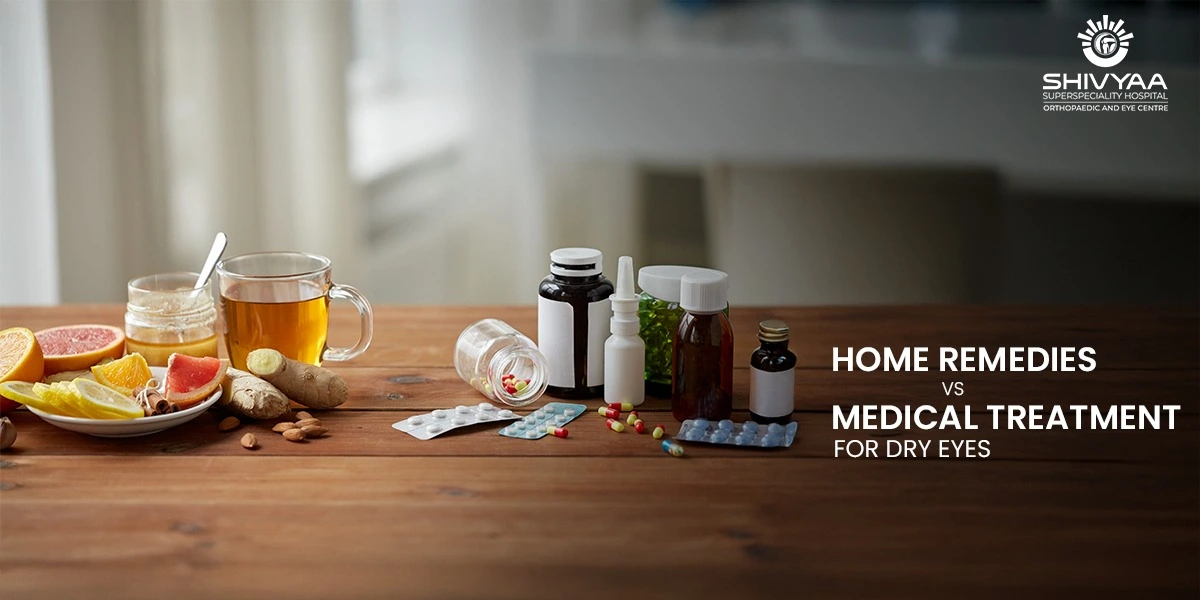
Home remedies assure natural remedies and ease. Medical therapies are specific and long-term in nature. Each of the two is worthy, but they are used for different purposes. It is important to know how to differentiate between gentle annoyance and the management of a chronic disease.
Let’s break down your options so you can see clearly again, without the constant dryness.
What Is Dry Eye? Understanding the Basics
Dry eye not only disrupts comfort but also your vision of the world. The condition affects your tear film, the three thin layers that protect and cover your eye surface. To see clearly and comfortably, you need a smooth, stable tear film.
Common Symptoms You Might Notice
Dry eye announces itself through several distinct sensations. Patients often describe:
- A persistent foreign body sensation: That nagging feeling of something in your eye that won’t come out
- Blurry vision: Visual impairment that swings or becomes clear intermittently upon blinking.
- Burning or itching: The painful sensations that increase during the day.
- Light sensitivity increases: The light environment gets irritating.
- Watery eyes: Paradoxically, eyes may overproduce watery tears in response to irritation
The Top Causes of Dry Eye Syndrome
Common Triggers You Face Daily
Several everyday factors contribute to this frustrating condition. Most of the time, people do not understand the impact their environment and lifestyle have on their eyes.
- Long hours on digital devices: Blinking becomes less frequent, and this may make the eyes dry.
- Indoor air from heaters or AC: These systems dry the air and can cause tears to evaporate faster.
- Outdoor allergens and dry winds: These environmental conditions may cause irritation of the eyes and increase the rate of tear evaporation.
Physical and Medical Factors
As one ages, particularly past 50 years, the body will automatically produce fewer tears.
- Aging, especially after 50: Tear production naturally decreases as we get older
- Hormonal changes in women: Pregnancy, menopause, and birth control pills affect the tear glands
- Prescription medications: Antihistamines, antidepressants, and blood pressure medication frequently decrease tear flow.
- Contact lens use: Lenses have the capacity to disrupt the natural tear film and make it less stable
Home Remedies for Dry Eyes: Simple Solutions That Work
For mild or temporary symptoms, home remedies for dry eyes often provide significant relief. They help your tears to work better and keep you comfortable, although you must use them and continue using them.
Quick Fixes You Can Start Today
These remedies target common triggers and require minimal effort to implement.
- Warm compresses: Place a clean, warm cloth over closed eyelids two times a day. It unclogs blocked oil glands and normal tear ducts.
- Humidifiers: Add moisture to indoor air to prevent evaporation of tears. This is very useful in winter or in air-conditioned rooms.
- Screen time adjustments: Follow the 20-20-20 rule. Look 20 feet away in 20 seconds after every 20 minutes. It prevents you from blinking and helps your tears.
Nutritional Support for Lasting Relief
The quality and quantity of tears directly depend on what you eat.
- Omega-3 fatty acids: Consume salmon, flax, or walnuts. They make good tears, lowering inflammation and aiding oil glands.
- Preservative-free eye drops: Add artificial tears to their eyes. To prevent irritation, pick preservative-free drops when you use them over four times in a day.
Lifestyle Adjustments That Matter
Minor environmental adjustments help reduce dry-eye triggers considerably.
- Avoid cigarette smoke: Smoke makes the eyes sore and makes tears dry.
- Take breaks from eye makeup: Makeup on the lashes may clog the oil glands.
- Wear sunglasses outdoors: Good wrap-around sunglasses will block the wind and dry air on the eyes.
Remember: These natural treatments for dry eyes work best for mild cases. If symptoms persist despite consistent use, you may need a medical evaluation.
Medical Treatments: When Home Care Isn’t Enough
Over-the-Counter Options
These nonprescription items provide you with relief even before you take prescription drugs.
- Artificial tears: Different types lubricate and soothe eyes temporarily. They work in mild and occasional dryness.
- Nighttime ointments: Thicker lubricants protect eyes while you sleep. Apply them in case your eyes remain dry or painful in the morning.
In-Office Procedures
A dry eye specialist performs these treatments when standard options fail.
- Punctal occlusion: The surgeon seals or partially seals your tear ducts to keep tears from your eye. They are able to do it temporarily or forever as you rely on them.
- Scleral lenses: This is a large-sized contact lens, which is placed over the cornea. They are over your eyes, make them wet, and enable you to see.
- Eyelid surgery: Doctors can surgically fix misalignment. In extreme situations, they carry out surgeries to conceal evaporation of tears.
Prescription Medications
These are such treatments that need the guidance and prescription of a doctor.
- Tear stimulation: Pilocarpine medicine causes your body to produce more tears. It aids in lessening symptoms of dry eyes.
- Acupuncture: There are individuals who are relieved through this alternative therapy. Research indicates its ability to treat the signs and symptoms of dry eye.
A qualified dry eye specialist will guide you through these options. They base recommendations on your specific condition, symptom severity, and underlying health factors.
Making the Right Choice for Your Eyes
How do you decide between home remedies and medical treatment? Start by evaluating your symptoms honestly.
Choose home remedies if:
- Your symptoms are mild and occasional
- You can identify specific triggers like screen time or dry air
- You experience relief with artificial tears or warm compresses
- You haven’t noticed any redness, pain, or vision changes
Seek medical help if:
- Even after using home remedies, symptoms continue to persist.
- You are in pain; red or light hurts you.
- Your sight becomes blurred or distorted in the daytime.
- You feel like something is constantly in your eye
- Home remedies provide only temporary, fleeting relief
Conclusion
When home remedies for dry eyes no longer help, or the symptoms are impacting your daily life, professional assistance is highly relevant. The right dry eye specialist determines the actual cause and prescribes remedies that you cannot get in a pharmacy.
Dr. Yatri Bhavsar, an eye doctor at Shivyaa Super Speciality Hospital in Ahmedabad, provides comprehensive eye care for problems like long-term dry eye.
- In-depth examinations to determine the actual cause of your symptoms.
- Individual treatment plans that combine the expertise of doctors and steps that are achievable.
- Advanced procedures when standard treatments don’t provide adequate relief.
Your eyes deserve expert attention. Reach out to Shivyaa Hospital today and see the difference professional care makes.