
You’ve done the physical therapy. You’ve rested, iced, and modified your activities. You even tried cortisone injections. But that shoulder aches, robs you of sleep, restricts you in what you can do, and cannot get you to what you love.
Shoulder surgery enters the conversation when conservative treatments stop delivering progress. For many patients, that conversation leads to shoulder arthroscopy—a minimally invasive approach that transforms how surgeons diagnose and repair joint problems.
Here’s what actually happens inside the operating room and which procedure might address your specific shoulder issue.
What Is Shoulder Arthroscopy
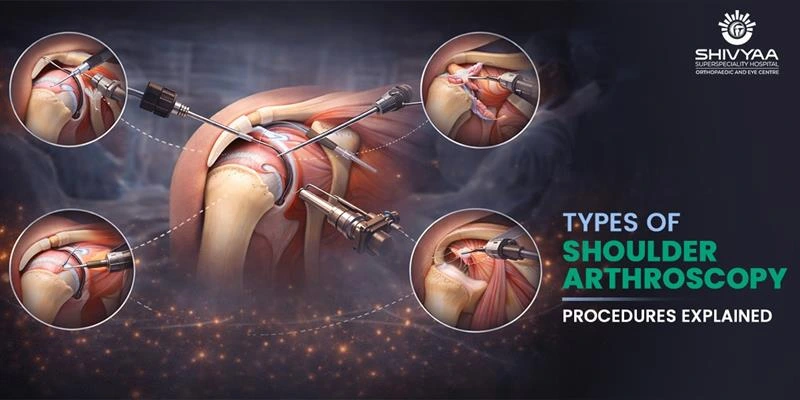
Surgeons insert the camera that is only the size of a fingernail through the incisions. That camera illuminates your shoulder joint and projects blown-up images on huge-screen televisions. Surgeons use other small incisions to insert instruments so that they can fix whatever is causing the pain that you are experiencing—torn tendons, cartilage, or inflamed tissue.
Patients are usually discharged on the same day. The healing process is quicker than with open surgery since we do not cut deep muscles. Physical therapy begins at an earlier age. Scarring stays minimal.
Why this approach works better:
- You’re back to desk work in days, not weeks
- Pain medication needs drop significantly
- Infection rates run much lower than open procedures
When Shoulder Arthroscopy Makes Sense
You have already experimented with conservative interventions—physical therapy, anti-inflammatory agents, and change of activities. You even must have received an injection of cortisone or two. But still your shoulder aches whenever you lift your arm above or make an attempt to sleep on that side.
It is at this point that arthroscopic shoulder surgery is involved. Surgeons normally prescribe it when:
- Six months of no surgery are not a difference
- Imaging reveals an issue of structure which will not correct itself
- Your daily function or sleep remains significantly impaired
Let’s walk through the specific conditions where this approach delivers results.
Rotator Cuff Tears
These are not tears that cure themselves. A tendon will not reattach itself without the assistance of a pull away. Sometimes, small partial tears can be ameliorated by rehabilitation. Full-thickness tears, especially in people who are active, normally need repair.
Surgeons apply arthroscopy to re-pin the tendon so that it can handle its initial point of attachment. The healing rates are usually superb in patients who are below 60. In the case of older patients, we consider the size of tears, the level of activity required, and the health overall.
Shoulder Impingement Syndrome
Bone spurs or thickened bursa create a pinching sensation when you lift your arm. The most painful area is between 60 and 120 degrees of elevation—the painful arc.
In an arthroscopy operation, the surgeons trim those bone spurs and take away the bursal tissue that is inflamed. This makes more room available to the tendons to slide. The majority of patients report the immediate effect of improvement of that catching sensation.
Shoulder Instability
Ligaments stretch or rupture when your shoulder slides a little out of the socket (subluxation) or dislocates altogether. The recurrence rate in first-time dislocators below 25 is high—in most cases—and frequently surpasses 70% without surgery.
Arthroscopic repair tightens such ligaments or even reattaches them to the bone. This is referred to as Bankart repair when done on the front or as reverse Bankart when done at the back.
Frozen Shoulder (Adhesive Capsulitis)
The capsule around your joint contracts and solidifies, and you are stuck to your arm. This is especially dangerous to people with diabetes, who develop the condition about 20 percent of the time.
Surgeons resort to capsular release when months of stretching do not bring about movement. Arthroscopy involves cutting through the tight capsule in order to achieve instant gains in range of motion. The patients require vigorous treatment following that to retain that movement.
Labral Tears
The labrum-cartilage rim on your socket may tear due to trauma or repeated overhead action. They are common among baseball pitchers and tennis players.
SLAP tears (Superior Labrum Anterior to Posterior) involve the proximal area that has the tendon of the biceps. Depending on the location and severity of the tear, surgeons repair the tear or cut off the frayed part.
Biceps Tendonitis
The biceps has a long head that passes through the shoulder joint. When it is enraged, each curl or elevation causes discomfort. When inflammation is persistent despite treatment, the surgeons can clean up the tendon sheath or do tenodesis, which is the reconnecting of the tendon to some other location.
AC Joint Problems
The point where the collarbone and shoulder blade meet each other—your AC joint—gets arthritis or divided in case of falls. Arthroscopic distal clavicle shave eliminates pain in the ends of the arthritic bones without impairment in their functionality.
Shoulder Operation Types: What Each Procedure Actually Fixes
Not every shoulder surgery is similar. Some repair torn tissue. Other ones leave more room to move around. Some substitute the joint completely. This is what each of the procedures does and to whom they are usually required.
Rotator Cuff Repair
In surgery, the torn tendon is reattached to the humeral head, which is the shoulder ball. The tendon is placed using small anchors with sutures until it heals. Partial tears only require debridement (cleaning up frayed edges), and complete tears require full reattachment.
Ideal candidates: Active, under 65 years of age, with acute tears. Older patients who experience chronic massive tears occasionally switch to alternative therapies.
Subacromial Decompression
Acromion bone spurs pinch rotator cuff tendons when overhead. These spurs are shaved off, and the inflamed bursa sac between bone and tendon is excised by surgeons.
Patients observe: Relief of the painful arc between 60 -120 degrees of arm elevation.
Diagnostic Shoulder Arthroscopy
There are even cases when surgeons require eyes in before committing to a certain repair. They push the scope in, examine the joint, and verify the diagnosis. In case they discover something that can be repaired, they continue that during the same anesthetic.
Typical case: MRI presents with a potential tear but creates doubts. The arthroscopy can give no doubtful answers.
Shoulder Arthroplasty (Replacement)
Arthritis kills the smooth cartilage on the surface of the joints. Bone rubs against bone. Replacement is a resurfacing on both sides, a humeral ball made of metal on one side and a socket made of polyethylene in the glenoid.
Two main types:
- Anatomic: Replaces both sides, preserves normal anatomy
- Reverse: Swaps ball and socket positions, used when rotator cuff fails
Fracture Repair
Proximal humerus fractures—fractures occurring close to the ball—are occasionally treated in casts. Dislocated fractures require hardware. Surgeons use plates and screws to ensure that the fragments of the bones are in the right place until they fuse.
Clavicle fractures: Mid-shaft fractures that are characterized by high displacement typically resolve better when surgically immobilized as opposed to immobilization by a sling.
Recovery Time for Arthroscopic Shoulder Surgery
The question that patients continually pose is the same: when will I be back to normal? The real story—it all depends on what your surgeon did and how well you recover. But here’s what the shoulder arthroscopy recovery timeline generally looks like.
Weeks 1-2: Protect and Manage
You will wake up with a slung arm. Wear it unless it is time to take a shower, and do not move the elbows and wrists harshly. The swelling is most intense on day three, and this slowly fades.
What you’ll do:
- Sleep in a propensory position—recliners suit better than flat beds those first nights.
- Wiggle fingers, wrist, and elbow so as to keep blood flowing.
- Use ice frequently- 20 min on and 40 min off during the day.
- At the time of pain, use medications; in the majority of cases, the patients change to Tylenol in a few days.
Don’t push through sharp pain. That’s your body saying “stop.”
Weeks 3-6: Start Moving
Physical therapy now has commenced. You will practice passive range of motion—the therapist will move your arm, and you will relax. This helps achieve stiffness without straining repair.
Sling usage varies by procedure:
- Rotator cuff repairs: 4-6 weeks in sling
- Labral repairs: 3-4 weeks
- Decompression alone: 1-2 weeks
Most patients return to desk work by week three. Driving remains off-limits if you’re in a sling or taking narcotics.
Weeks 6-12: Regain Control
You transition to active motion—moving your arm yourself. Therapy introduces light resistance bands. Sleeping becomes comfortable again for most people.
Milestones:
- Reach overhead with the opposite arm for assistance
- Touch the back pocket
- Lift light objects (coffee cup, remote control)
Months 4-6: Build Strength
That is when actual work begins. You will move onto dumbbells, cables, and sport exercises. Rotator cuff repair and labral repair require the entire six months before the heavy lifting can commence.
Return to activity:
- Golfers: Swinging by month 4-5
- Swimmers: Gradual return month 5-6
- Throwers: Progressing to full effort month 6+
Months 6-12: Final Gains
Complex repairs take up to a year before full recovery, or strength and endurance equal to the other side. Don’t rush this phase. Reinjury between months 6-9 implies beginning afresh.
What Happens During Arthroscopic Shoulder Surgery
You will come to the surgical center, put on a gown, and introduce yourself to your anesthesia team. The majority of patients will select a nerve block localized in the region—that is, it will make your whole arm go numb within 12-24 hours; it will keep you pain-free as deep sedation subsides.
During the procedure:
Your surgeon places you either in a slightly reclining position or sideways. They wipe your shoulder with antiseptic solution and put in sterile fluid to make the joint swell up—it gives them a working space and makes the joint easier to see.
The initial incision is approximately a centimeter. It has a camera, the arthroscope, that is a pencil-thin camera that transmits high-definition images to screens. These real-time images guide your surgeon through the joint.
Depending on what is to be fixed, additional small cuts are made. Surgeons operate through them, inserting specialized tools to excise inflamed tissue, smooth bone spurs with burrs, and suture anchors to fix the repairs.
Most procedures run 60-90 minutes. And you will wake up in a sling.
After surgery:
An hour or two before you are discharged, nurses check your vitals. Someone must drive you home. You will go away with written instructions for wound care, pain management, and sling use. Sleeping on a wedge pillow or in a recliner. Frequently—every 20 min on, 40 off when awake. Nothing can manage swelling more than this.
When your incisions are healed, which is typically after two weeks, physical therapy begins. At the beginning of the sessions, the therapist performs gentle movement; he moves your arm as you remain relaxed.
Be aware of warning signals: a temperature of more than 101°F, pus that is draining through the cuts, acute pain, or cold or numb fingers. Contact your surgeon in case any of these happen.
Follow-up visits also enable your surgeon to see how you are recovering and change your course of treatment. Patients who make a commitment to rehab tend to be better as compared to those who do not. Your final result is dependent on the work that you invest.
Conclusion
Your shoulder requires a surgeon with specialized skills. In Shivyaa Superspeciality Hospital, Dr. Parth Bhavsar is the head of our orthopedic treatment services and has more than ten years of experience.
Why patients trust us with their shoulders:
- Superspecialist Surgeon: Dr. Parth Bhavsar specializes in orthopedic and arthroscopic services only.
- Advanced Techniques: We adopt modern arthroscopic techniques to ensure faster healing and scarless healing.
- Holistic Method: From your initial visit up to the rehabilitation treatment, our team is with you.
- Decade of Trust: Dr. Part Bhavsar has 10+ years of excellence and thousands of successful surgeries, and it is a trusted name in Ahmedabad with regard to bone and joint health.
Visit Shivyaa Superspeciality Hospital to learn more or schedule an appointment. Your shoulder’s best outcome starts with the right surgeon.