Selecting the appropriate lens in your cataract surgery is a big step. You desire a clear vision of the things you enjoy, be it when reading a book or playing a round of golf. We get it. You want plain and simple facts with all the choices.
This guide breaks down the types of cataract lenses in a way that actually makes sense. We will discuss the functioning of each lens and who will benefit most.
Let’s clear things up.
What Are Cataract Lenses?
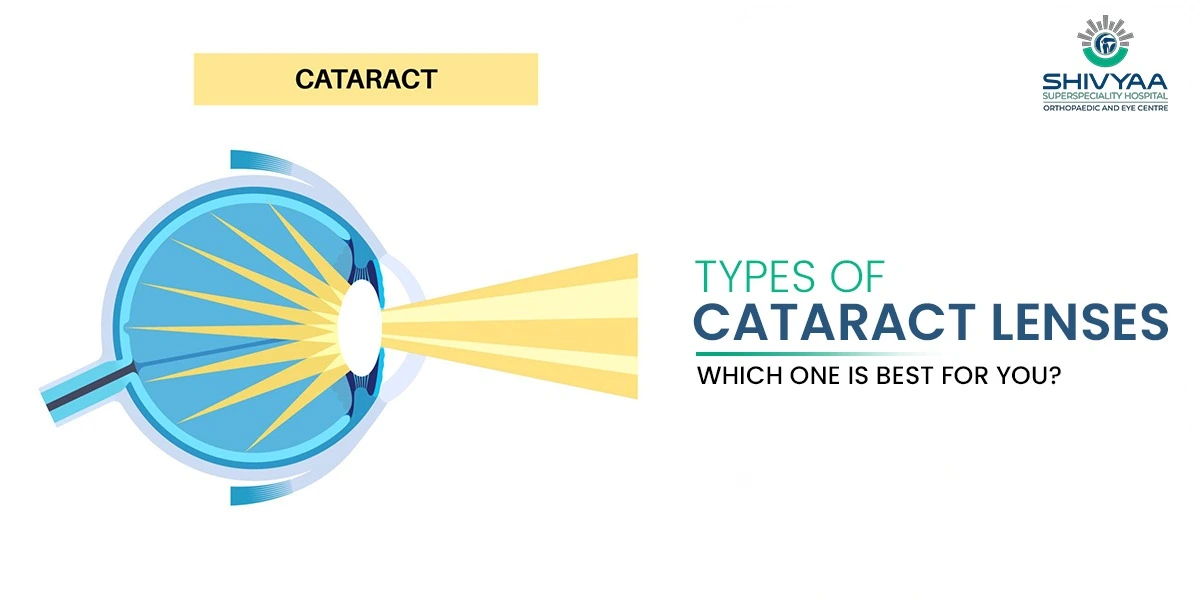
Your eye is like a camera. It contains a lens that lures light to create a clear image. The formation of a cataract causes the lens to seem dirty, like a camera lens. During the surgery, we take out the cloudy lens and insert a new clear lens.
Doctors call these implants intraocular lenses, or IOLs. They act as your eye’s new permanent lens. You will never feel them. They never need cleaning. They remain in your eye, and throughout the day, they work to put the world into perspective again.
Cataract Surgery Lens Types
Picking your lens is a big moment. You are not just fixing a problem. You are choosing how you will see your morning coffee, your phone screen, and the faces of your family. Let us walk through the cataract lens types available today.
We break down each option simply.
Standard Lens
The reliable choice for distance.
This is the classic monofocal lens. It gives you clear, sharp distance vision. You will see road signs and the TV well.
- The catch: It does not fix astigmatism. You will require reading glasses to read or use a computer.
- Best for: The person who is comfortable with wearing glasses post-surgery and wants a dependable, pain-free solution.
Toric Lens
The astigmatism fixer.
If you have astigmatism, this lens is your friend. It corrects that blur while also giving you good distance vision.
- How it works: We can pair it with other lenses for a customized approach.
- Best for: Anyone with astigmatism who wants sharper overall sight.
Extended Depth of Focus Lens
The computer and car guru.
This lens creates one elongated stretch of focus. You get excellent distance, and your intermediate vision (think dashboards and computer screens) gets a major boost.
- Remember: It is effective when you possess minimal astigmatism.
- Best: People who are on the road or on the screens all the time.
Multifocal Lens
The glasses-no-more hero.
This lens aims to give you the full package: near, intermediate, and distance. It is a popular choice for reducing glasses dependency.
- The trade-off: There are those individuals with some glare or even halo effect when viewing lights at night.
- Best: The people who will not want glasses and can afford to have some time to get used to it.
Bi-focal Lens
The all-rounder.
This is not the same as the antique bifocal glasses. This is a good lens to use when seeing at a distance, at a middle distance, and near sight.
- The details: It works best in good lighting conditions. Night glare is possible but affects less than 5% of users.
- Best for: Patients who want excellent range but have low astigmatism.
Top-up Multifocal Lens
The vision enhancer.
We can also add a top-up multifocal lens to your existing cataract surgery, which you had previously, in order to have better close-up vision. It makes you see closely without glasses.
- Consider this: It comes with slightly higher risks, like inflammation.
- Best for: Previous surgery patients seeking a near-vision upgrade.
Tinted Lens
The retina protector.
Some lenses have a slight yellow tint. Surgeons sometimes recommend these to filter blue light and potentially protect the retina from future damage.
- The benefit: It may slow the progression of early retinal disease.
- Best for: Patients with a family history of or early signs of macular degeneration.
Why the Right Lens Changes More Than Your Vision
Picture your morning routine. You wake up and check your phone. You pour coffee and scan the headlines. You grab a book or head out for a walk.
Now imagine doing all of that without reaching for glasses once. Feels good, right?
The lens you choose today shapes those everyday moments tomorrow. Each type of cataract lens paints your world a little differently. Some give you sharp distance but soft near vision. Others let you see it all.
Here is why getting this decision right changes everything:
- Freedom from glasses. Some lenses aim to cut the cord completely. You read menus, watch TVs, and drive cars without frames on your face.
- Night driving confidence. Certain lenses handle headlights and streetlamps beautifully. Others might create mild glare as your brain adjusts.
- Lifestyle matching. Gardeners need a different vision than pilots or knitters. Your daily life should guide your choice.
The cataract lens benefits you enjoy depend entirely on matching the technology to your world. Not the other way around.
How to Pick the Perfect Lens for Your Life
Look at How You Live
Do you chase grandchildren around the yard? Knit heirlooms by firelight? Pilot cars through midnight highways?
Your days hold the answer. Active souls who want glasses-free living often lean toward multifocal lenses. Night owls who demand crisp, glare-free headlights might prefer monofocal options. Your lifestyle drives the decision.
Consider the Numbers
Insurance usually covers standard monofocal lenses fully. Premium lenses ask for an investment beyond that. You pay for the extra technology that cuts glasses dependency.
Think of it like buying shoes. Basic sneakers get you there. Custom orthotics cost more but feel amazing on your feet.
Factor in Your Eyes
Think about your eyes. You require a toric lens in case of astigmatism. It curves the light in such a way that you no longer see two images or blurred images. Multifocal IOLs generally work best in the event that you have presbyopia or the blur that comes with age. The eye doctor will scan your eyes in a fingerprint. There are no two eyes which are similar.
Talk to Your Doctor
Bring your questions. Ask them about the way you feel and what is bothering you. Explain how you would think your ideal day of viewing would be.
An experienced surgeon will hear it all and proceed on to demonstrate you the best cataract lens options. Together you will select the correct one.
Conclusion
At Shivyaa Superspeciality Hospital, we turn these decisions into reality every day. Dr. Yatri Pandya Bhavsar leads our ophthalmology team with a steady hand and a clear focus on what matters: you.
She brings deep expertise in Cataract and Refractive Surgeries to every consultation. She does not just implant lenses. She listens to what you desire, examines your eyes with advanced equipment, and recommends the most suitable course of action to you.
She performs surgery with the latest equipment and with true caring whether you require a simple single-focus lens or a high-quality multi-focus lens.
Your vision shapes how you experience life. Let us help you make it extraordinary.