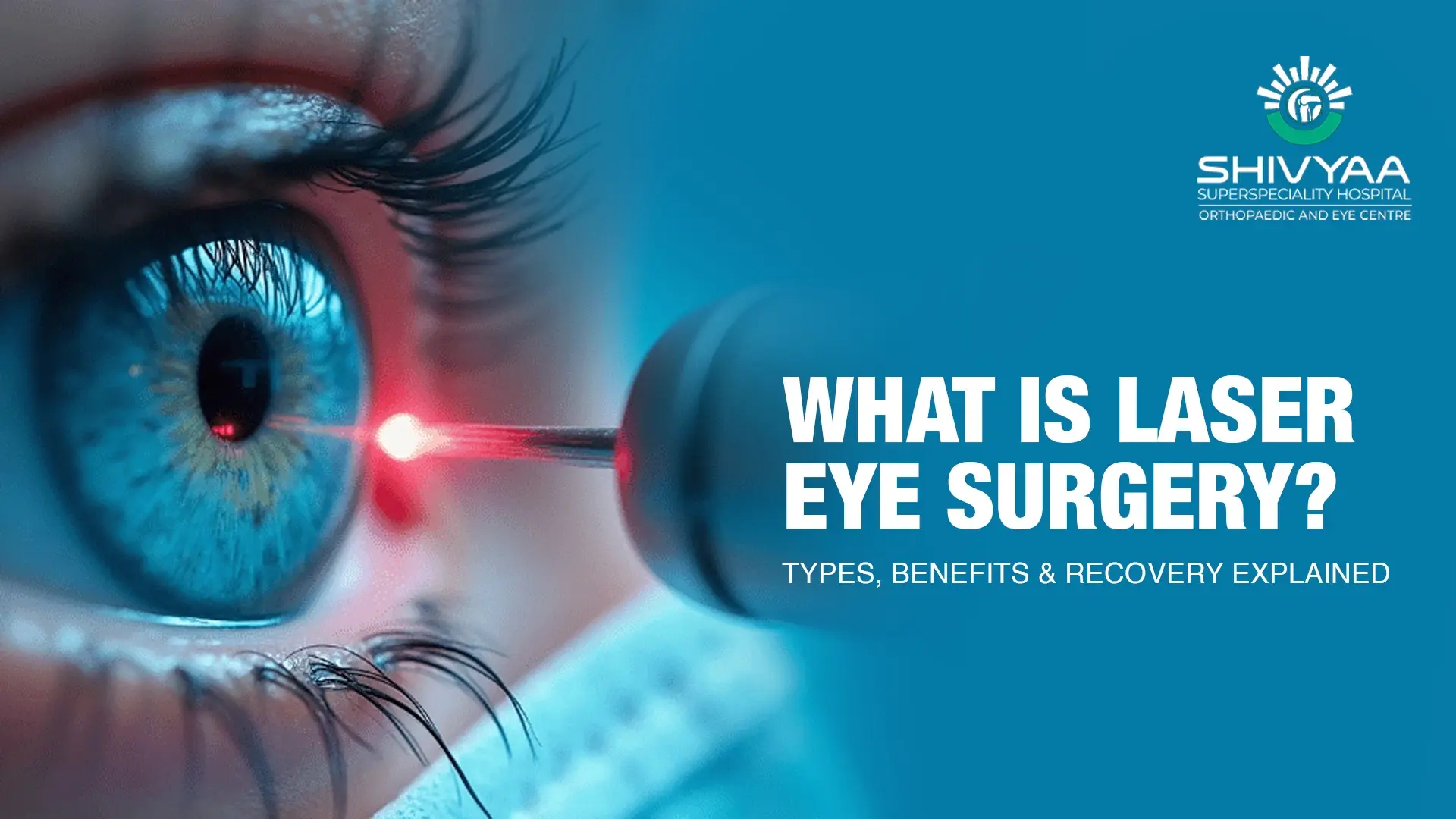
Sick of having glasses and contacts in your life? You’re not alone. Laser eye surgery is the new solution for the many millions who are now seeking a more permanent solution, although the acronyms LASIK, SMILE, and PRK can initially be confusing.
This guide cuts through the noise. We are going to take you through the process in simple terms; we will break down the available options and provide you with a realistic picture of the benefits and the recovery process. We aim to achieve our objective of having clear and factual information so that you can confidently speak to your eye care professional.
What is laser eye surgery?
Laser eye surgery is an outpatient surgery that involves the precise reconstitution of the cornea which is the clear surface of the eye, to correct the way light focuses on the retina. The image of it is a permanent calibration of the natural lens of your eye.
The idea is a one-liner: lessen or get rid of your reliance on glasses or contacts by relying on correcting standard refractive shortcomings like nearsightedness, farsightedness, and astigmatism.
How a Laser Operation Reshapes Your Vision
The computer-controlled laser carries out the fine task as per a regular and highly controlled sequence.
The core steps of a typical laser operation are:
- Numbing: Painkillers on your eyes make you feel better.
- To form an access: A thin protective flap is made on the cornea surface.
- Reshaping: Microscopic tissue amounts can be removed by an excimer laser to change curvature.
- Healing: The flap is pulled back into place, and stitches are not required.
The entire laser operation for one eye often takes less than 10 minutes of active treatment.
Types of Laser Eye Surgery
1. LASIK: The Gold Standard for Many
The procedure that is mostly performed is LASIK. It is the process of forming a thin corneal flap, laser reshaping of the underlying tissue, and repositioning the flap.
Key Points:
- Best for: The use is beneficial to patients with normal corneal thickness and regular prescriptions.
- Recovery: Majority record a considerable improvement in less than 24 hours.
- Consideration: Needs a sufficient thickness of the cornea to safely make the flap.
2. PRK: The Original Flap-Free Technique
Before LASIK, there was PRK. The surgeon uses the outer layer (epithelium) of the cornea and removes it gently instead of a flap. The laser subsequently directs the corneal surface.
Key Points:
- Best for: People with thin corneas, dry eyes, or some professions (military, contact sports).
- Recovery: Longer than LASIK. The epithelium begins to regenerate, taking several days, and stability in vision takes a few weeks.
- Advantage: No potential of complications of flaps.
3. SMILE: Minimally Invasive and Flap-Free
SMILE is more recent, a keyhole surgery. A femtosecond laser makes a minute and rounded lenticule within the cornea, which is removed with a tiny 4mm laceration.
Key Points:
- Best for: Treatment of nearsightedness and astigmatism; it is highly appreciated due to its minimal invasiveness.
- Recovery: Fast and some patients have a lower risk of developing dry eye post-operative.
- Note: Currently approved for a narrower range of prescriptions than LASIK or PRK.
4. LASEK: A Modified Approach
LASEK is a less common variant. The epithelium is loosened with an alcohol solution, moved aside for the laser treatment, and then repositioned. It’s sometimes considered for patients who are not ideal LASIK candidates but may find PRK recovery too lengthy.
Pro Tip: The “best” type isn’t universal. Your surgeon should recommend a specific procedure based on detailed corneal mapping and your individual eye anatomy, not just personal preference.
6 Key Benefits of Laser Eye Surgery
1. Unmatched Daily Convenience and Freedom
The greatest benefit is liberation from corrective lenses. Just think about swimming, travelling, or just waking up with clear eyesight. It removes the continued expenditure and bother of repairs of contacts, solutions, and glasses. This is transforming for professionals, athletes, and anyone who is active.
2. A Surprisingly Quick and Straightforward Procedure
The therapy is itself short. The majority of time is consumed in pre-op preparation. Numbing drops will ensure that you stay cool, and a laser treatment usually takes less than a minute per eye. It is a walk-in, walk-out outpatient process: you walk in, get treated, and walk out within a few hours.
3. Rapid Visual Recovery and Return to Routine
You cannot go off for weeks. The majority of patients report the improvement of vision in less than 24 hours, and many can get back to desk work and light activities the following day. It requires several weeks to be fully stable, and the dramatic improvement is immediate.
4. A Proven Track Record of High Success
Laser eye surgery has a high success rate in modern days. More than 99 percent of patients will attain 20/40 or better, and over 90 percent will achieve 20/20 or better. This consistency is due to the decades of perfection of technology. More than 98% customer satisfaction is achieved on a regular basis.
5. Personalized, High-Definition Vision Correction
Today’s technology scans the individual defects in your eye, as would be done with a fingerprint, and corrects them to an extent that can be even better than a regular pair of glasses or contacts. This may result in better night vision and reduced glare or halos.
6. Long-Term Value and Lifestyle ROI
The initial expense is huge, but look at the savings over the long run. In ten years, the costs of contacts, solutions, glasses, lenses, and insurance are usually more than the cost of one surgery. The process usually is self-paying.
What’s the Right Age for Laser Eye Surgery?
Your prescription must be stable for at least one to two years before surgery. If your vision is still changing, correcting it now would be temporary—like tailoring a suit for a teenager who’s still growing.
This is why there’s a common minimum age for laser eye surgery. Most surgeons recommend waiting until at least 18, as hormonal changes that can affect vision often stabilize by this age.
- For Younger Adults: Meeting the minimum age for laser eye surgery (18+) is just the first box. Your surgeon will verify your prescription hasn’t changed in your recent eye exam history.
- For Older Adults: A comprehensive exam is crucial. If early cataracts are detected, a lens replacement procedure might be a more effective long-term solution than laser correction.
Laser Eye Surgery Recovery Timeline
The First 48 Hours: Essential Downtime
Take a total break of one or two days. Eyes are gritty, watery, and light-sensitive, and vision is blurry. This is normal.
Sleep is your best medicine. Avoid screens, reading, and hard work. Take on schedule the prescribed anti-inflammatory and antibiotic drops to ensure prevention of infection and swelling.
The First Week: Gradual Return to Routine
The majority of patients resume work at their desks and light duties in 2-3 days. The sight is much more distinct, yet it can change.
Key restrictions this week:
- No rubbing your eyes (wearing protective covers at night).
- Do not use dusty or smoky places.
- No hot tubs, heavy exercise, or swimming.
- Lubricate the tip with preservative-free lubricating drops regularly to fight the dryness.
The First Month: Protecting Your Results
Although you are okay, you do not stop the internal healing. The corneal tissue becomes remodeled to make it long-term stable.
Within the following few weeks, you would be able to resume activities in the gym and most sports gradually. Contact sports, swimming, and eye makeup: Wait at least one month (or as your surgeon recommends) to avoid infection.
Pro Tips for a Smooth Recovery
- Hydrate: Excessive consumption of water will be beneficial in relation to the symptoms of dry eye.
- Tech Breaks: Follow the 20-20-20 rule when using screens to reduce strain.
- Follow-Up: Never miss follow-up. They enable your surgeon to be able to detect any minor problems.
Conclusion
At Shivyaa Super Speciality Hospital, your vision is entrusted to experienced professionals like Dr. Yatri Bhavsar. We utilize advanced diagnostic mapping to recommend only the procedure that matches your unique eye anatomy—whether that’s LASIK, PRK, or SMILE. From your initial consultation through full recovery, we provide transparent guidance and dedicated support.
Ready to explore your candidacy with a specialist who prioritizes your long-term eye health? Schedule a consultation with Dr. Yatri Bhavsar at Shivyaa Super Speciality Hospital. Let’s discuss how we can help you achieve the freedom of clearer vision.